
A pharma-sponsored publication plan is an integral part of a scientific communications plan, which in turn is a part of the wider Medical Affairs strategy. It is also a living document that contains publication strategy and objectives, key scientific communication points and publication tactics: where, when and how the data will be published.
Of course, the key prerequisite for a publication is data availability – you can only publish your results once you have them. One may say that a publication plan has its foundation in the clinical development milestones (time points of clinical study readouts) and rests on the pillars of publication and communication objectives, which are informed by the overall medical strategy.
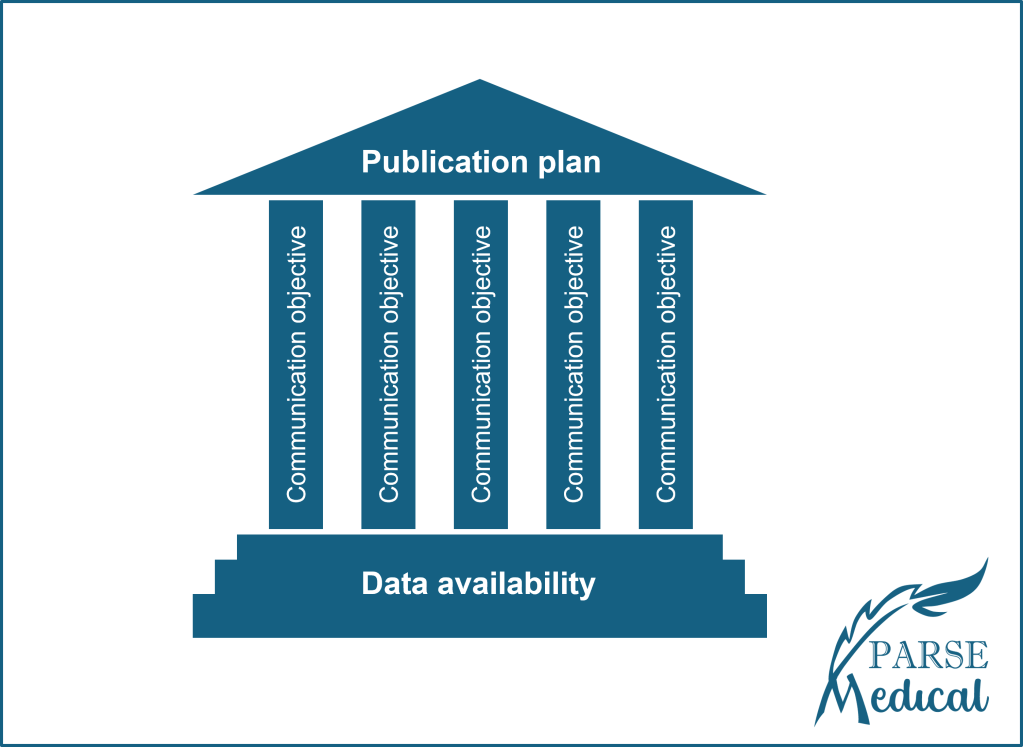
How do Medical Affairs develop their communication objectives, and how are they incorporated into publication planning? Every company would go about it slightly differently, but in the majority of cases they will take the following into account when developing their publication and communication strategy:
- Situation analysis (may include SWOT)
- Identification of the target audience
- Competitor intelligence
- Literature gap analysis
- Analysis of target journals and congresses
Situation analysis and SWOT
SWOT, a description of Strengths, Weaknesses, Opportunities and Threats, is a strategic planning tool that is time-bound, i.e. relevant for a product or project at a specific point in time.In a SWOT, Strengths and Weaknesses are defined by internal attributes, factors and resources of the product that will facilitate or may hinder its success. Opportunities and Threats, on the other hand, are external facilitators or barriers/challenges. Thus, Strengths may refer to company’s proprietary technology or production capability, whereas Opportunities may include emergence of a new health condition or changes in regulatory policies. The company’s lack of expertise in the field may be viewed as a Weakness, but a competitor’s strong presence and market control could be a Threat.
Target audience
Your selection of target audience is extremely important for success and will define what, when and how you communicate the clinical data. Examples of target audiences are:
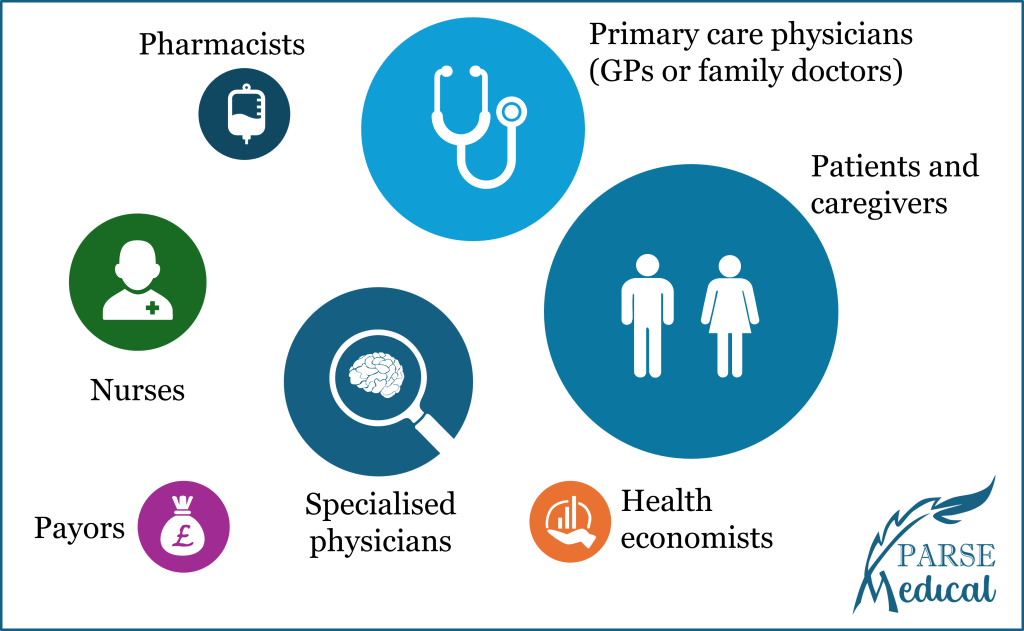
All people on this list are potential stakeholders, but some groups will be your top priority (primary target audience). Focus on these groups and ask yourself:
- What is their level of awareness (what do they already know)?
- What are their educational needs?
- Where do they prefer to get information about healthcare?
- What would I like them to learn?
and, perhaps most importantly: - What would I like them to do as a result of this learning?
Competitor intelligence
Competitor intelligence in publication planning consists of collecting insights into the publication activities of other companies that develop and/or market drug products within the same therapeutic area. By analysing competitor publications and clinical trial data, you can identify their strengths and weaknesses and anticipate future research trends. It will enrich your understanding of the competitive landscape and help identify the best strategy to position ‘your’ drug product.
Literature gap analysis
A literature gap analysis is a systematic process of reviewing the existing body of literature to identify ‘gaps’ – lack of data on specific research points and lack of relevance or links between research questions and data that may be used to support answers.
Target journals and congresses
Journals and congresses are a critical component of publication planning: their choice will determine the timelines of publications, the audience you will reach, and the impact you will generate with your data releases.
If you have reviewed the existing literature on a given indication or therapy area, you already have a very good idea of potential target journals and congresses. How will you incorporate this knowledge into your publication plan, and how will you select the most appropriate targets? It’s probably a good idea to start with a full list of target journals and congresses, sort them by their focus and timing of publications, and identify your primary and secondary targets. Here are some of the questions you can ask yourself when sorting your list.
 Parse Medical | Consultancy services for Medical Affairs and Medical Communications
Leave a comment